

WET HIRE · APPLICATION
Tight Access & Lift-ins
37 years of doing the tough jobs the others don't touch
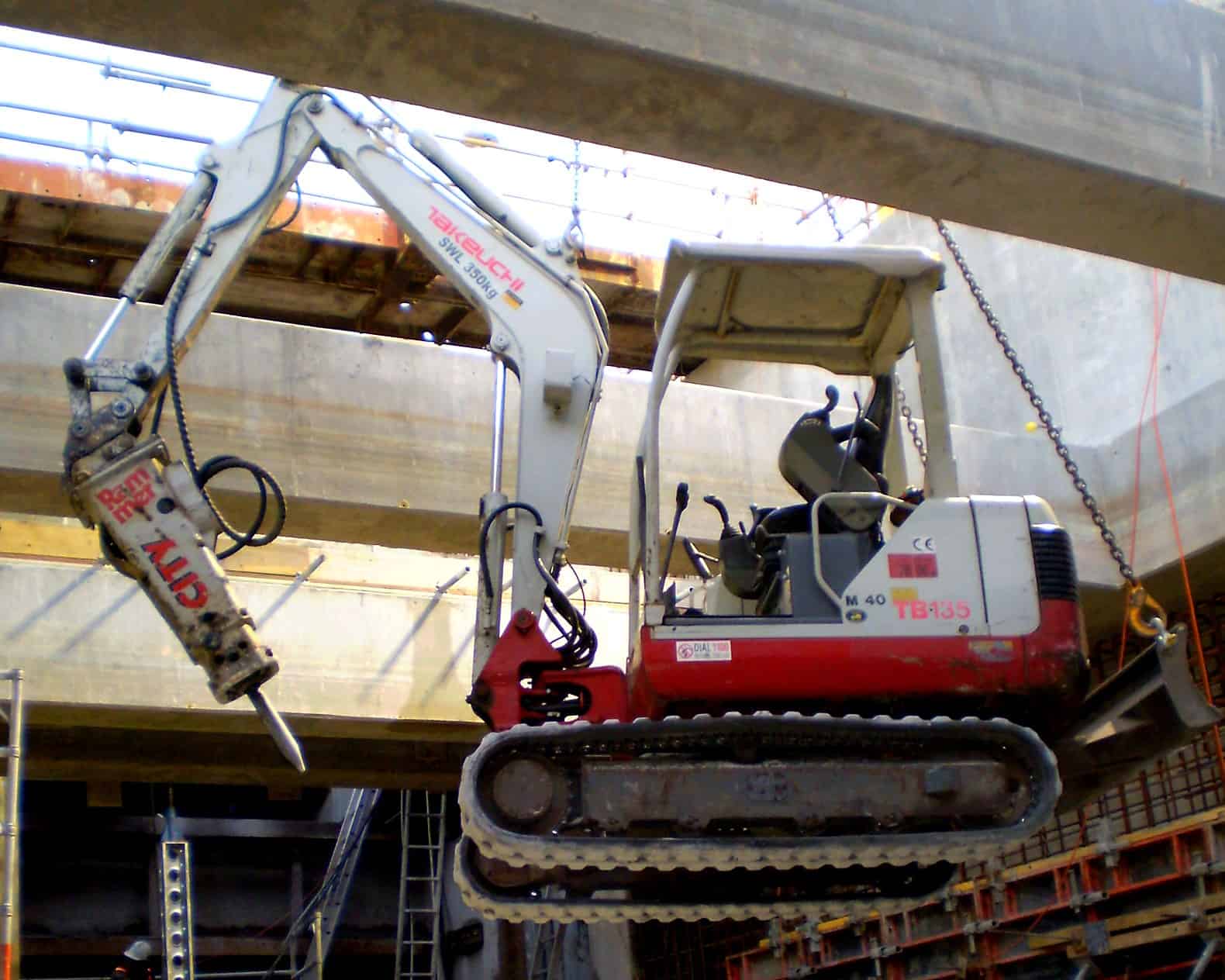
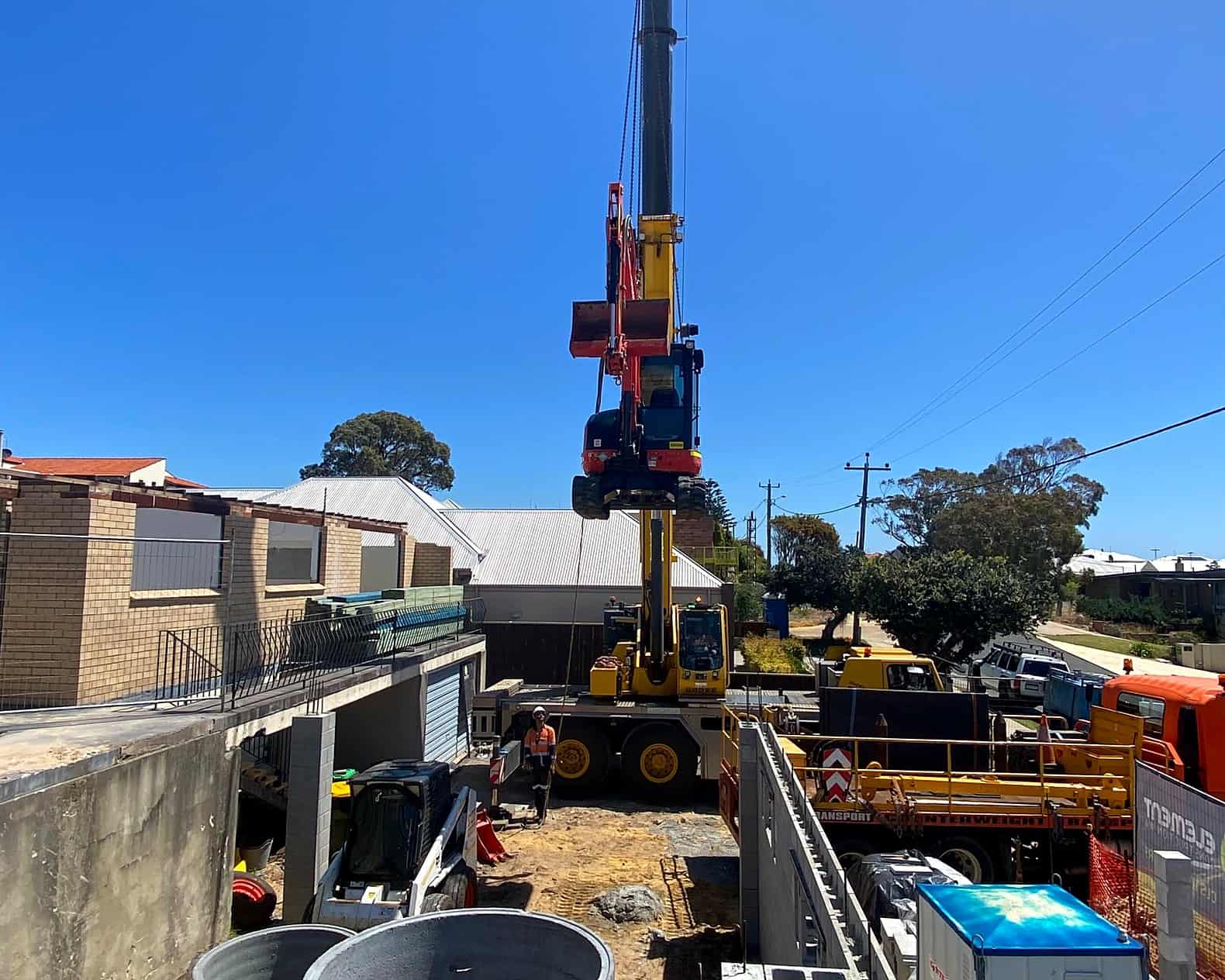
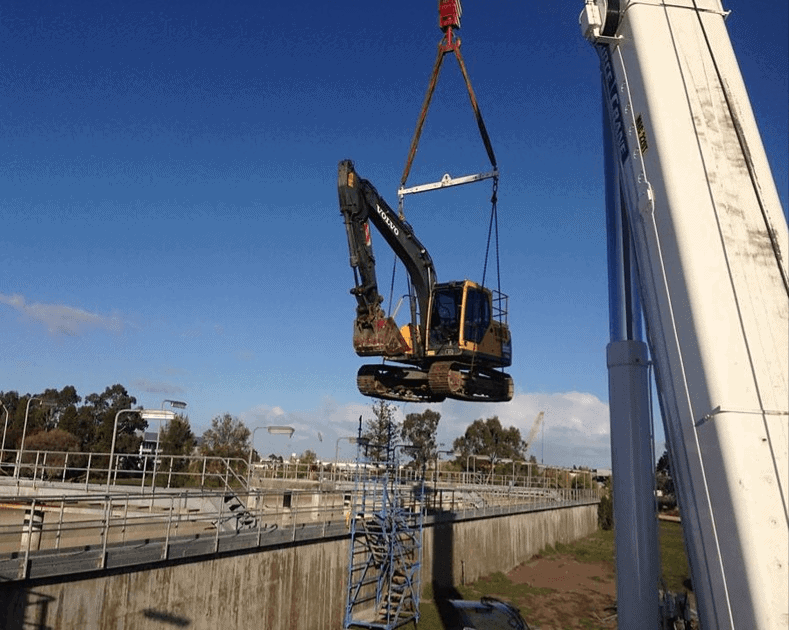
Compact machines into spots full-size gear can’t reach — through side access, down into basements, up onto rooftops and into boxed-in courtyards. When there’s no way in at ground level, the machine can be craned in.
Where This Comes Up
No way in? There's usually a way in.
Other hire companies tend to avoid the jobs that look boxed in, cramped or nearly impossible to reach. Since 1989 we’ve built the fleet and the team to take those jobs on, with compact machines sized to the access you have and operators who are used to confined sites.
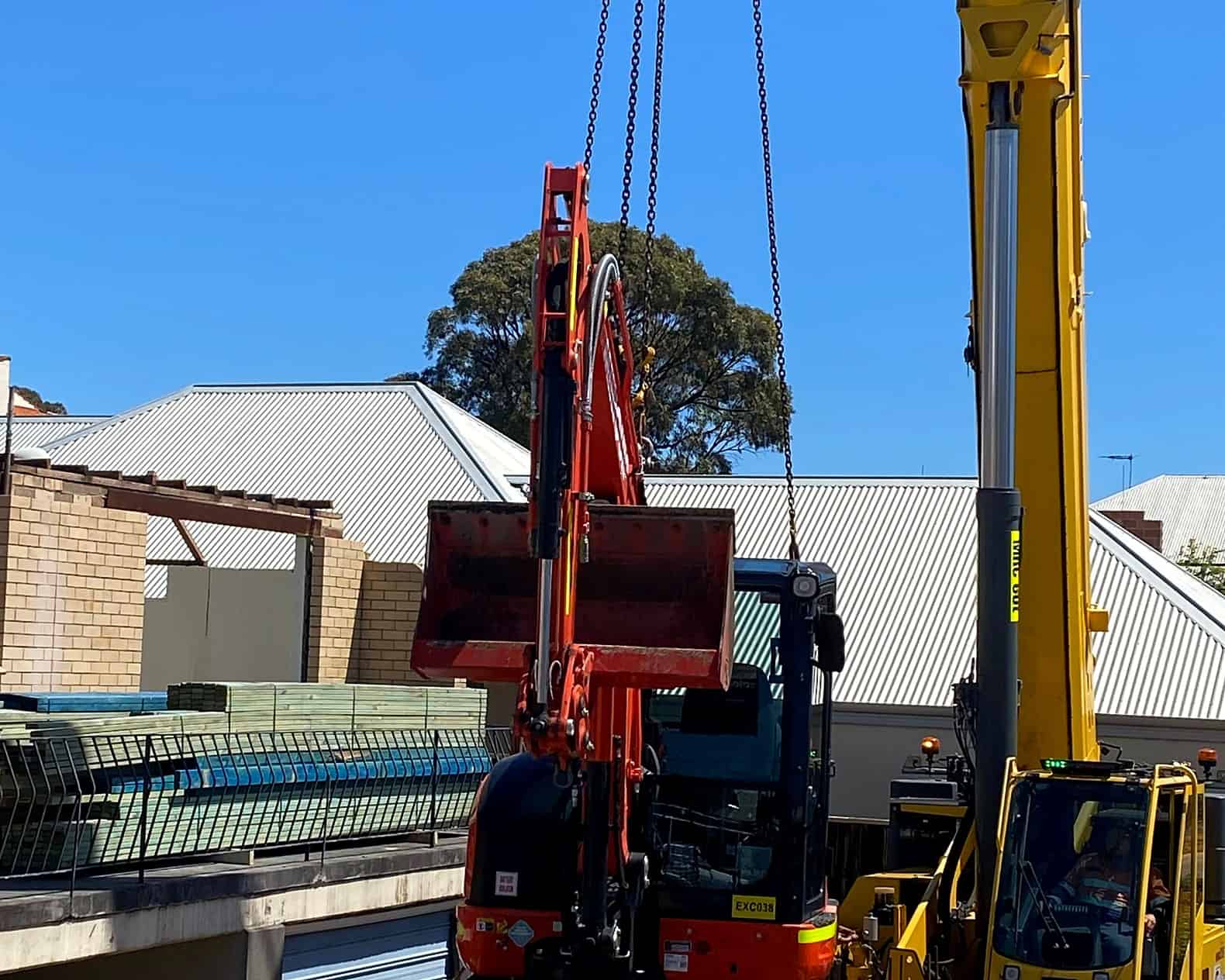
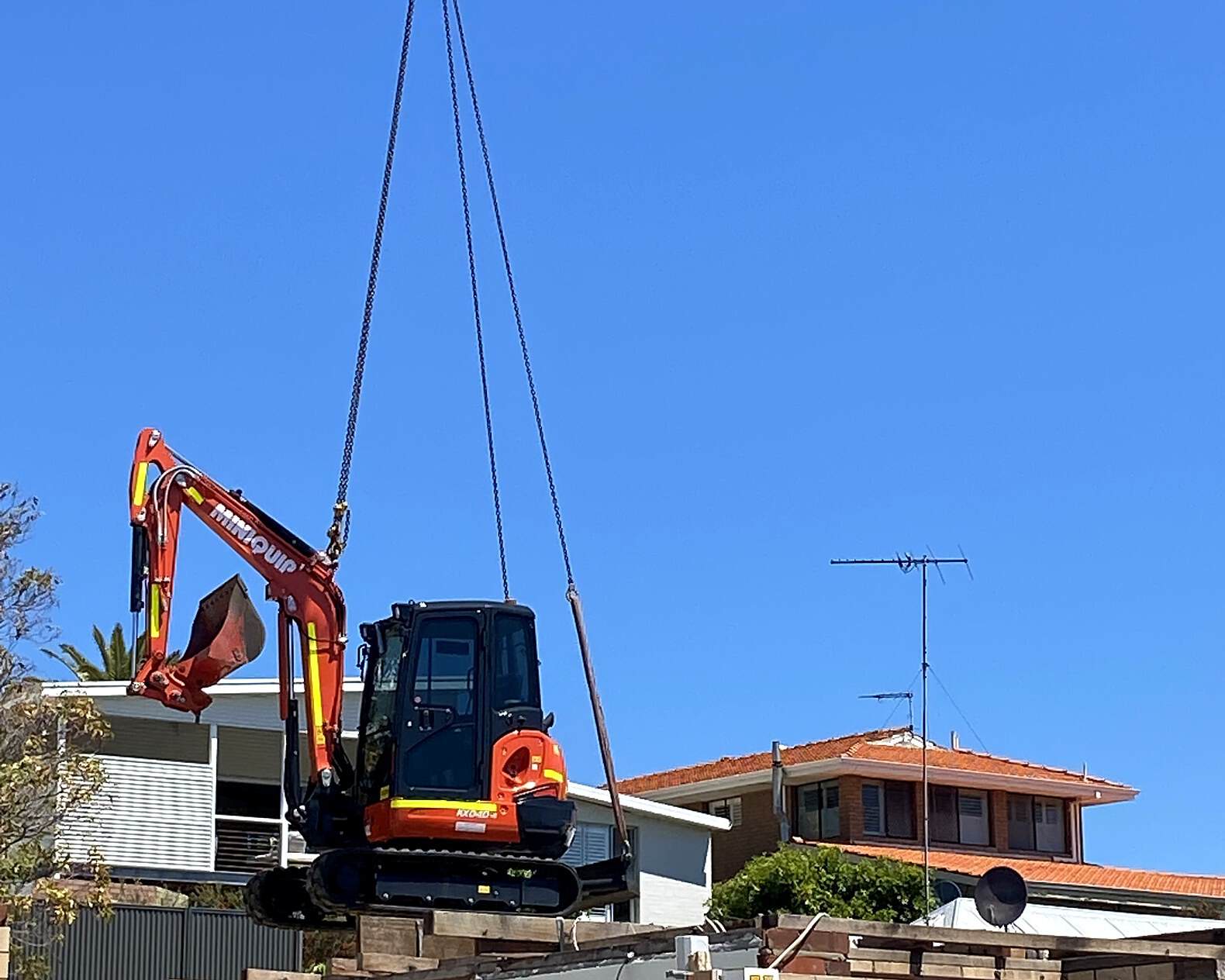
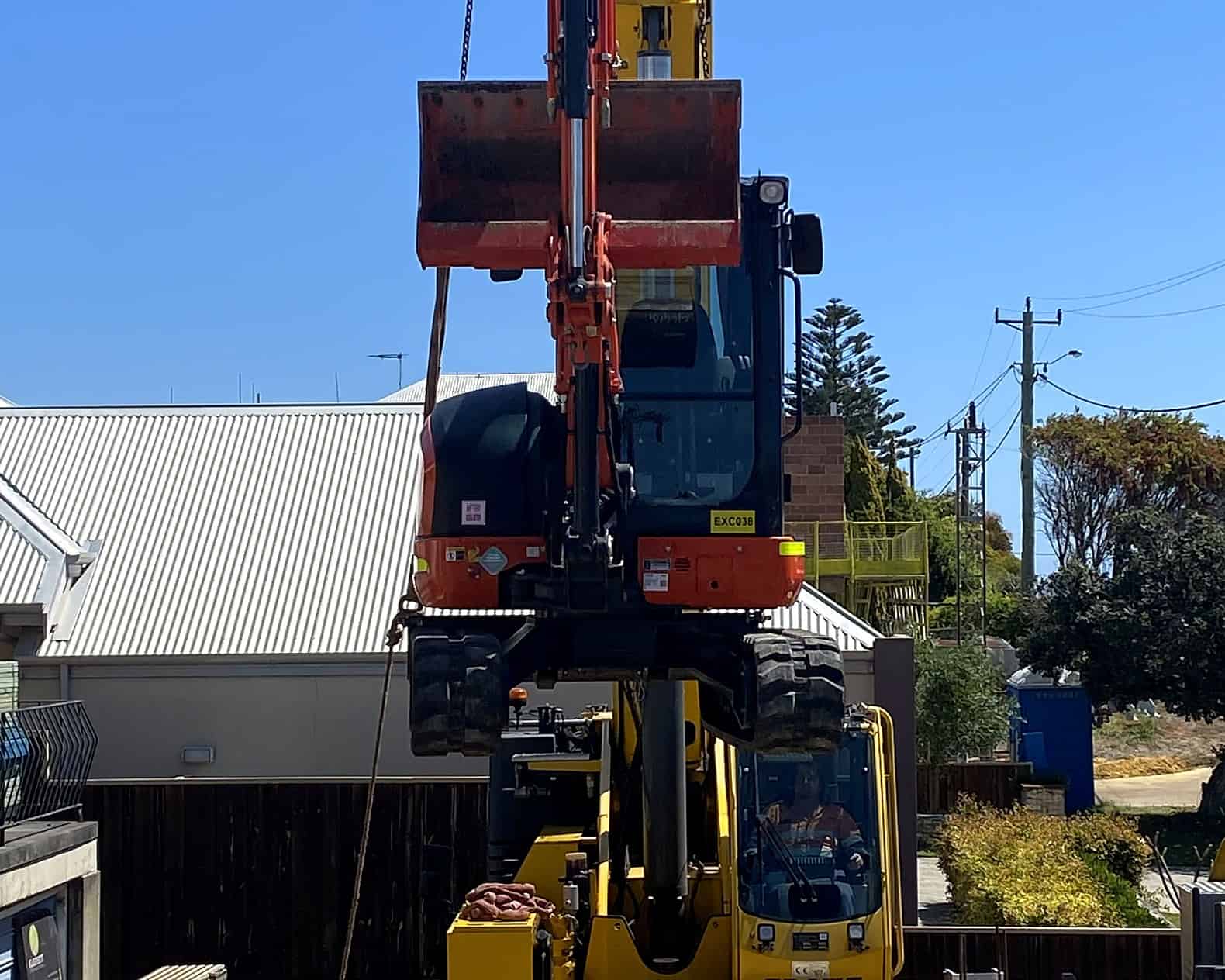
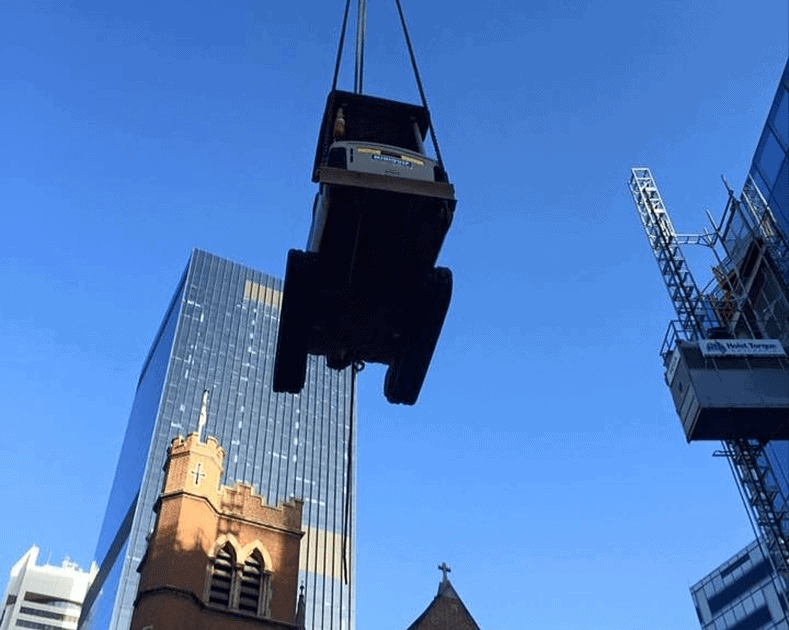
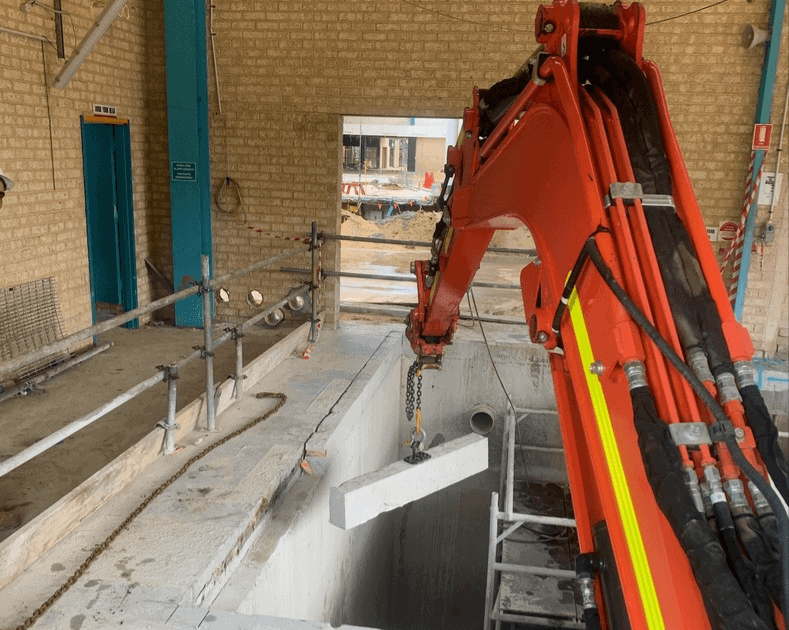
Where there’s no ground-level route at all, the machine can be craned in — onto rooftops, down into basements and into courtyards closed in on all sides. You or your crane contractor supply the crane and dogman, and we supply the machine and ticketed operator, ready for the lift.
This is operated plant hire. We supply the machine and ticketed operator. Where a lift-in is needed, the client supplies the crane and dogman. We bring the machine and operator – you manage the lift and the works on site.
Specialised Tight-Access Fleet & Capabilities
Matching the right compact machinery to your exact access width and job scope ensures rapid, precise output without site damage:
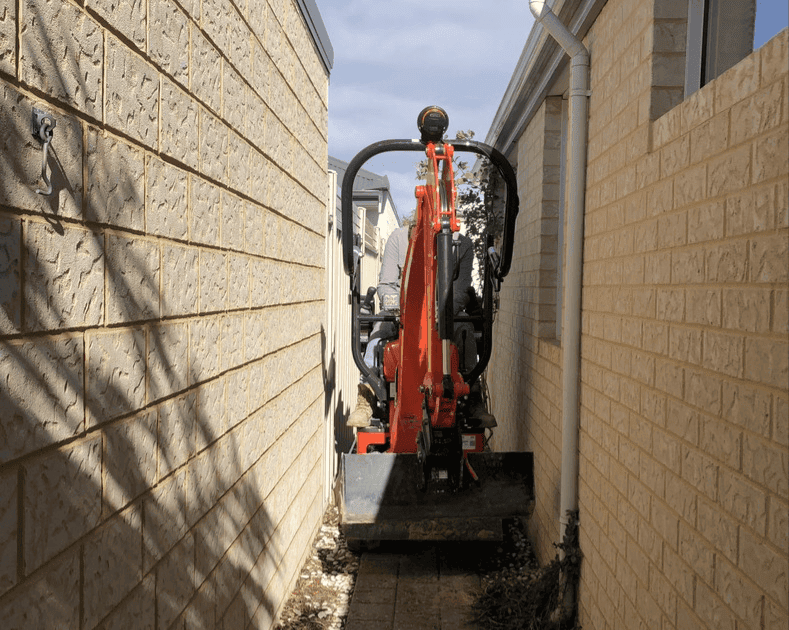
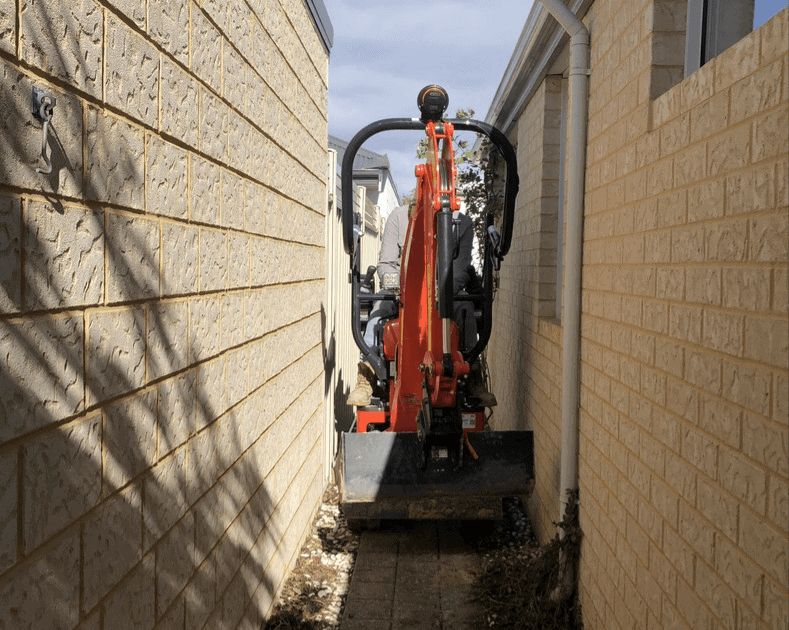
- Micro & Mini Excavators (Pass Through Standard Doorways): Ultra-compact units featuring retractable tracks and folding ROPS frames designed specifically to squeeze through standard single doorways, narrow residential side alleys, and tight gate openings.
- Low-Profile Track Loaders (Posi-Tracks for Restricted Work Zones): Compact, high-flotation track loaders engineered with exceptional maneuverability, low overhead clearance, and minimal ground pressure.
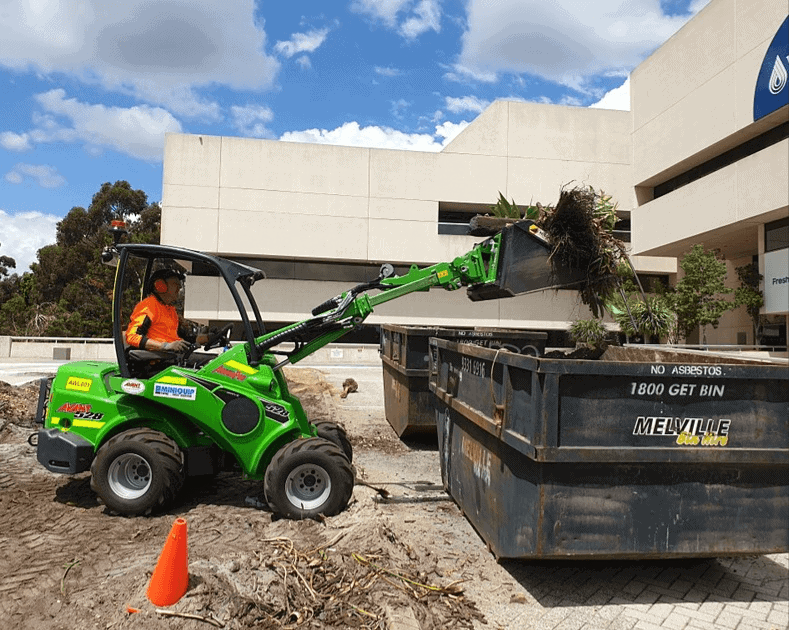
- Agile Skid Steers (High-Output Spoil Handling in Confined Spaces): Compact powerhouses built for rapid material handling, tight-pivot turns, and fast load-outs. Paired with our experienced wet hire operators, they make quick work of loading spoil directly into tippers or bins from tight-access positions.

What you're actually hiring
Getting a machine into a hard spot is a planned job:
- Compact machines sized to the access you have
- Machines ready for lift-ins with your crane and dogman
- Careful operators used to confined, boxed-in sites
- 37 years of working out the way in when there isn’t one
THE RIGHT GEAR
Wet hire machines that fit where others don't
The compact end of the fleet, each supplied with an operator.

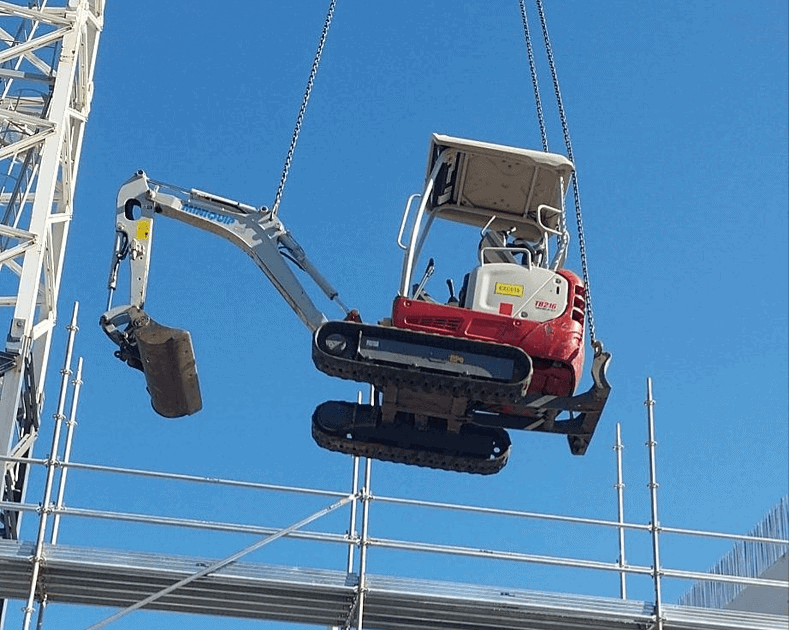
1.0–1.7t Micro excavator
Fits through ~750–900 mm doorways; the classic lift-in machine.

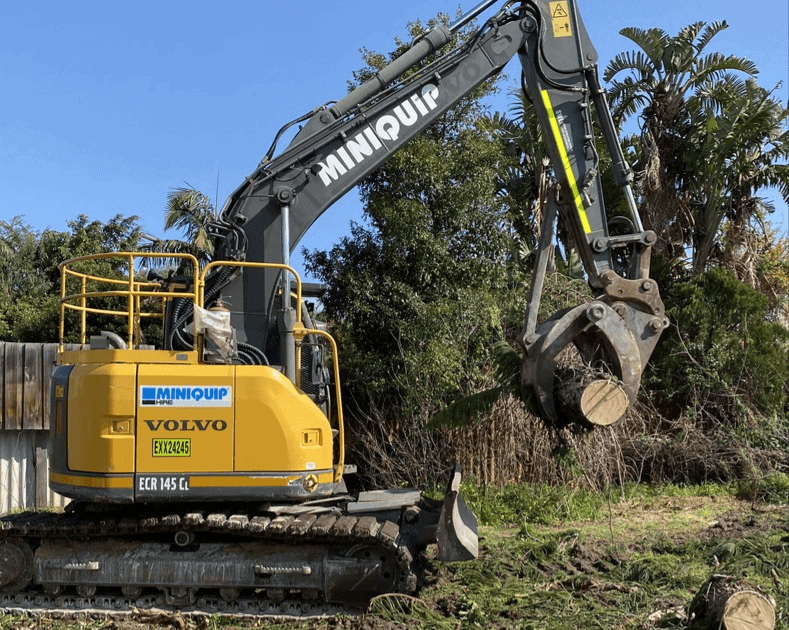
2.5t Excavator
More grunt where access still allows a slightly larger machine.

Mini loader
Narrow, nimble material handling in confined spaces.

Crane lift-in
Your crane and dogman place the machine where there’s no route in.
Applications
Where we get machines in
The access challenges an operated compact machine and lift-in suit.
Tight & limited side access
Through standard gates, paths and side returns full-size gear can't use.
Basements & below-ground
Down ramps or craned into basement and sub-floor levels.
Rooftops & podiums
Craned up onto roof, podium and elevated slab levels.
Boxed-in courtyards
Lifted into courtyards and light wells closed in on all sides.
Operated plant hire, not contracting: we supply the machine and a skilled operator to run it to your plan. You (or your site supervisor) direct the works.
Miniquip wet hire team in action
RELATED WORK
Other environments our operators work

Rock & Limestone Breaking
Hit rock? Perth’s limestone shelf, caprock and hard clay stop a standard dig fast.


Decommissioning & Site Clearing
Small-scale strip-outs, site rubble clearing and load-out on tight, restricted sites.
BOOK OPERATED Tight Access & Lift-ins
Tight spot? We'll find the way in.
Tell us the site and the job — we’ll match the right machine, breaker and operator, and get you a quote.
Tight Access & Lift-ins Wet Hire FAQ's
The things people ask us most about tight access & lift-ins.
How small a gap can your machines fit through?
Our smallest micro excavators are around 1.0–1.7 t and can pass through openings from roughly 750–900 mm — about a standard doorway. Tell us your narrowest pinch point (gate width, path, doorway) and we’ll match a machine that fits, or plan a lift-in if nothing fits at ground level.
How does a crane lift-in actually work?
Where there’s no ground-level route, the machine is lifted in by crane — onto a rooftop or podium, or down into a basement or courtyard. The client or their crane contractor supplies the crane, the licensed crane operator and the dogman, and plans the lift. We supply the machine and ticketed operator, who takes over once the machine is placed. We don’t supply or advise on cranes or lifting gear.
Do I need permits for a lift-in?
Often, yes. Craning over a boundary, closing a footpath or lane, or working in a road reserve usually needs council or local-government approval and sometimes a traffic management plan. Those approvals are the responsibility of the site controller and the crane contractor.
Is a lift-in safe on an occupied or built-up site?
The lift is managed by the crane contractor and the site controller under WorkSafe WA high-risk work requirements, including the lift plan and exclusion zones. Once the machine is placed, our operator takes over and works to the site’s safety requirements.
Can the machine still do real work once it's up there?
Yes — once placed, the operated machine works exactly as it would at ground level: breaking, digging, clearing, shifting material. The lift-in is just how it gets to the work. Rooftop, podium and basement jobs are where compact operated plant genuinely earns its keep.
Why Miniquip for the hard-access jobs?
Thirty-seven years of them. We’ve built a fleet that goes small enough to fit, and our operators are used to working on lift-in jobs once the machine is in place. It’s the work a lot of hire companies would rather not take on — and it’s exactly the work our team is used to.